How QR-Based Certificate Verification Builds Trust and Prevents Misuse
As digital certificates become more common, verification becomes just as important as issuance. A certificate may look professional on screen, but unless it can be validated, recipients and third parties may still question its authenticity. This is why QR-based certificate verification has become an essential part of modern credential systems.
By connecting a certificate to a verification record, QR technology makes it easier to confirm whether a credential is genuine, correctly issued, and tied to the right event or achievement.
What Is QR-Based Certificate Verification?
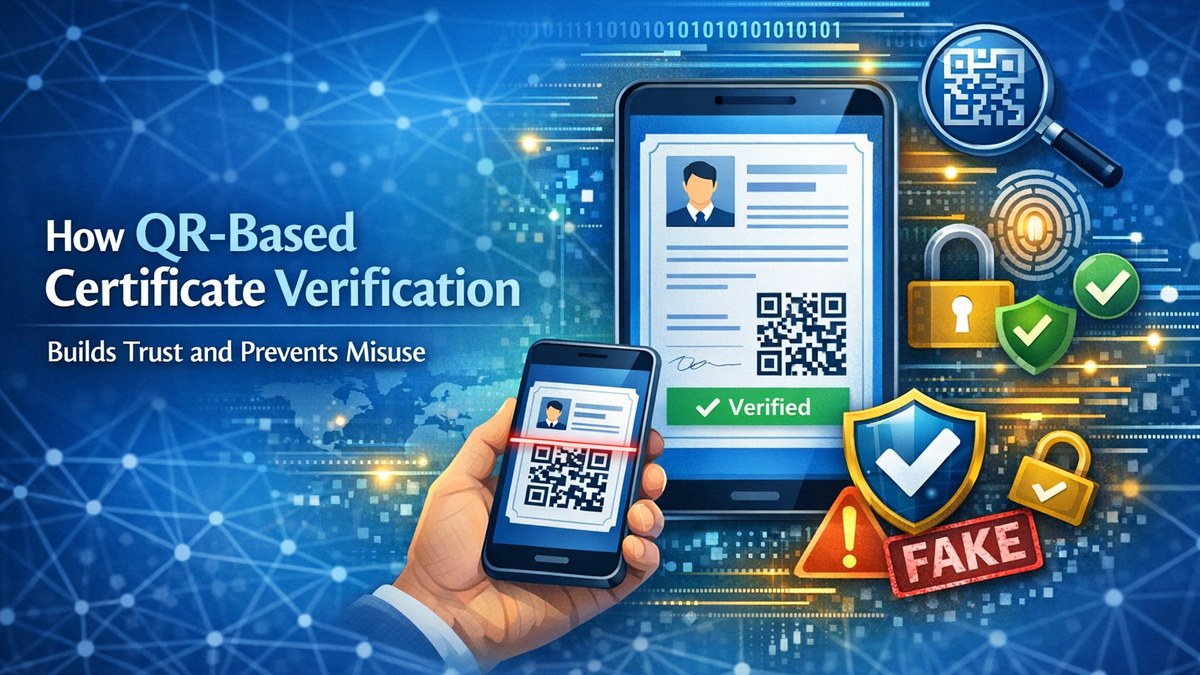
QR-based certificate verification is a process in which a QR code printed or embedded on a certificate links to a trusted verification page or verification record. When scanned, the QR code helps confirm that the certificate was officially issued by the organization and has not been altered or fabricated.
This approach turns a static certificate into a verifiable credential. Instead of depending only on visual appearance, a certificate can now be backed by a live validation mechanism.
Why Verification Matters
Many certificates are shared through email, downloaded as PDFs, uploaded to professional profiles, or presented during job applications and academic reviews. In these cases, the recipient of the certificate is not always the only person who needs confidence in it. Employers, institutions, committees, and external reviewers may also need a reliable way to verify the credential.
Without verification, even a genuine certificate can raise doubts. A QR-linked validation method reduces this uncertainty and improves trust in the issuing organization.
Key Benefits of QR Verification
1. Better Authenticity Checks
A QR code gives viewers a quick and direct way to confirm that the certificate belongs to a valid record.
2. Reduced Risk of Misuse
If someone edits or recreates a certificate visually, the QR verification layer makes fraudulent reuse much harder.
3. Faster Validation
Instead of emailing the organizer or asking for manual confirmation, the verifier can scan and validate instantly.
4. Stronger Institutional Credibility
Organizations that provide a clear verification mechanism appear more professional, transparent, and technology-enabled.
5. Better User Confidence
Recipients also benefit because they can share their certificates knowing that others can easily confirm authenticity.
How QR Verification Typically Works
In a well-designed certificate system, each certificate is linked to a structured record. The QR code on the certificate usually points to a verification page or endpoint that displays certificate details such as participant name, event name, issue date, and status. This makes the credential easier to validate without exposing unnecessary internal data.
The exact implementation may differ, but the core idea remains the same: the certificate must connect to a trusted system-owned source of truth.
Why It Matters for Events and Institutions
For conferences, universities, training academies, and professional associations, verification is not just a technical feature. It protects reputation. When certificates are verifiable, the issuing body reduces confusion, prevents disputes, and builds trust with participants and external stakeholders.
Conclusion
QR-based certificate verification strengthens digital credentials by making them easier to trust, easier to validate, and harder to misuse. It is one of the most practical ways to improve the credibility of digital certificates in modern workflows.