How Digital Certificate Verification Works: Ensuring Authentic Credentials Online
Digital certificates are now widely used by universities, conferences, training institutes, and professional organizations to recognize participation, completion, and achievements. As these certificates become more common in academic records, professional portfolios, and job applications, ensuring their authenticity becomes increasingly important.
This is where digital certificate verification plays a critical role. Verification systems allow organizations, employers, and institutions to confirm that a certificate was legitimately issued and has not been altered or misrepresented. By providing a structured way to validate credentials, verification mechanisms strengthen trust in digital certificates and protect both the issuing organization and the certificate holder.
Modern certificate platforms incorporate verification workflows that make it easy for third parties to confirm the authenticity of a credential while maintaining appropriate security and privacy controls.
What Is Digital Certificate Verification?
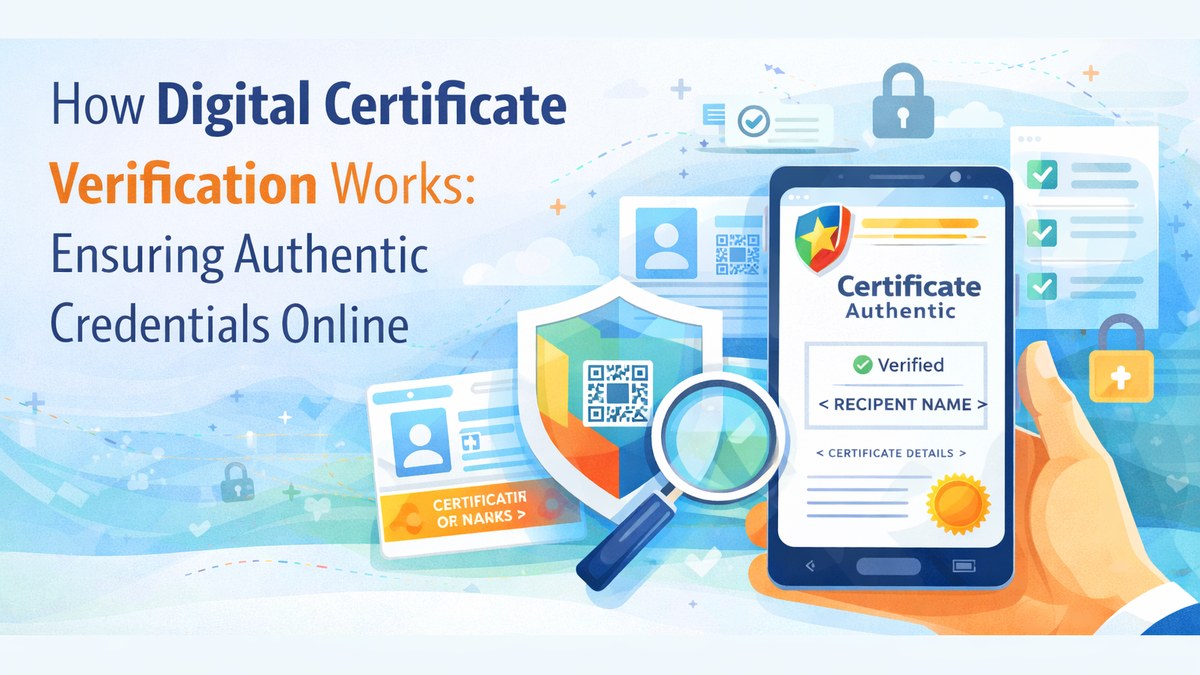
Digital certificate verification is the process of confirming that a certificate has been issued by a legitimate organization and that its contents have not been modified after issuance. Verification systems allow anyone reviewing the credential—such as employers, academic institutions, or event organizers—to validate its authenticity through a trusted platform.
Instead of relying solely on visual inspection of the certificate document, verification systems provide an independent confirmation mechanism. This ensures that the certificate being presented corresponds to a valid record within the issuing institution’s system.
In most digital certificate systems, verification is performed through a dedicated verification page where the certificate identifier or verification code can be entered. The platform then retrieves the corresponding certificate details and confirms whether the credential is valid.
Why Certificate Verification Is Important
As digital credentials become easier to generate and distribute, the potential for misrepresentation also increases. Without a verification mechanism, it may be difficult for organizations reviewing a certificate to confirm whether the credential is genuine.
Verification systems address this issue by allowing third parties to independently confirm the authenticity of the certificate. This strengthens the credibility of the issuing organization and increases the value of the credential for recipients.
For institutions that regularly issue certificates, providing a verification mechanism demonstrates professionalism and digital maturity. It shows that the organization takes credential integrity seriously.
How Certificate Verification Works
Although implementations may vary between platforms, most digital certificate verification systems follow a similar workflow.
1. Certificate Issuance
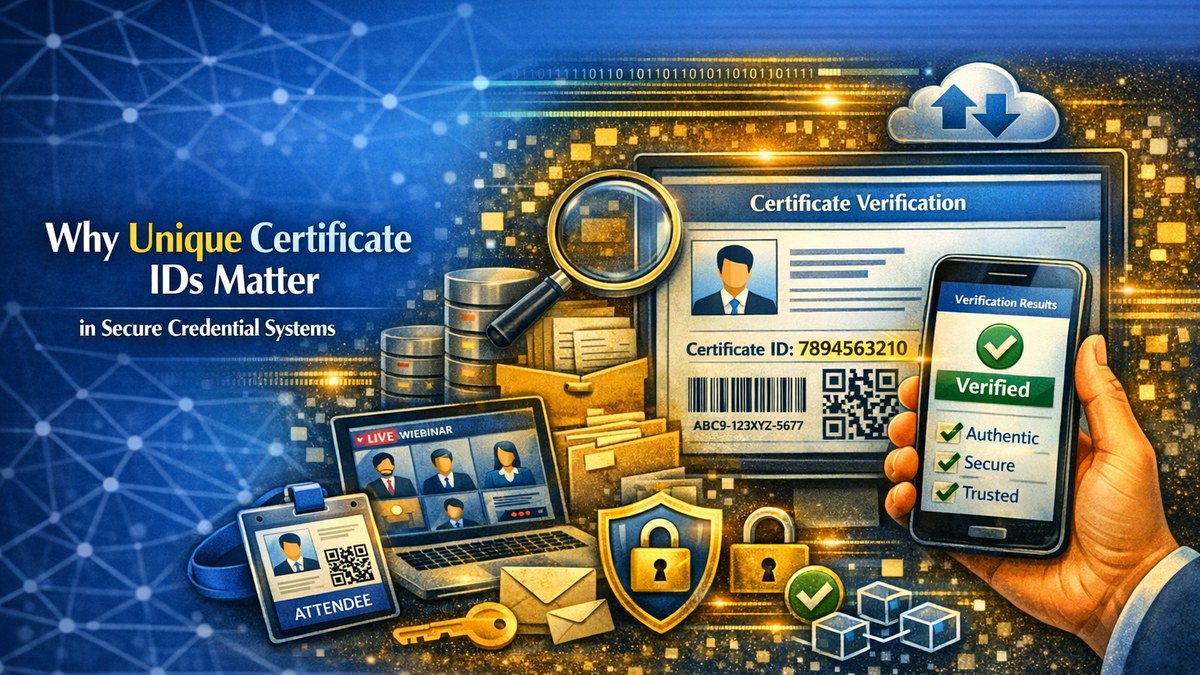
When a certificate is generated, the system assigns a unique identifier to that credential. This identifier may appear as a certificate ID, verification code, or embedded reference number within the document.
The certificate record is then stored in the platform’s database along with relevant participant information such as name, event title, and issue date.
2. Verification Reference
The certificate typically includes a verification reference that allows third parties to confirm its authenticity. This reference may appear as a printed code, QR code, or verification link embedded within the certificate.
Anyone reviewing the certificate can use this reference to access the verification page.
3. Verification Request
When a reviewer enters the certificate ID or scans the QR code, the verification system retrieves the corresponding certificate record from the platform’s database.
The system then displays the certificate details, allowing the reviewer to confirm that the certificate information matches the presented document.
4. Authenticity Confirmation
If the certificate exists in the system and the details match the original record, the platform confirms that the credential is valid. If the identifier does not exist or the information does not match, the system indicates that the certificate cannot be verified.
This simple but effective process allows institutions to maintain reliable credential verification.
Common Verification Methods Used in Digital Certificates
1. Certificate ID Verification
The most common method is a unique certificate ID printed on the certificate. Reviewers can enter this ID into a verification page to confirm the credential details.
2. QR Code Verification
Some certificates include QR codes that link directly to the verification page. Scanning the QR code automatically loads the certificate record within the verification system.
3. Secure Verification Links
In certain platforms, certificates include direct verification links that allow reviewers to access the credential record instantly without entering a separate code.
4. Database-Based Validation
Behind the scenes, the verification system checks the certificate identifier against stored records in the institution’s database to confirm authenticity.
Benefits of Digital Certificate Verification
1. Increased Trust in Credentials
Verification systems strengthen confidence in digital certificates by allowing third parties to independently confirm authenticity.
2. Protection Against Misrepresentation
By linking certificates to official records, verification systems reduce the risk of fraudulent or altered credentials.
3. Improved Institutional Credibility
Organizations that provide verification capabilities demonstrate professionalism and responsibility in managing digital credentials.
4. Better Acceptance in Professional Settings
Employers, academic institutions, and professional organizations are more likely to accept certificates that can be independently verified.
5. Long-Term Credential Reliability
Verification systems ensure that certificates remain trustworthy even years after they are issued.
The Role of Verification in Modern Credential Systems
As digital learning and professional events continue to grow, digital credentials are becoming an increasingly important part of academic and professional recognition. Verification systems ensure that these credentials remain reliable and meaningful.
By integrating certificate verification into the digital credential lifecycle—from issuance to distribution and long-term validation—institutions can build a robust and trustworthy certification system.
Platforms that support certificate verification help organizations maintain credibility while providing recipients with credentials that carry real value in professional environments.
Conclusion
Digital certificate verification plays a vital role in maintaining trust in modern credential systems. By allowing independent confirmation of certificate authenticity, verification mechanisms protect institutions, strengthen recipient credibility, and improve confidence in digital certificates.
For universities, conference organizers, and training providers, implementing certificate verification ensures that digital credentials remain secure, reliable, and professionally recognized.
Frequently Asked Questions
What is certificate verification?
Certificate verification is the process of confirming that a digital certificate was legitimately issued by an organization and has not been altered.
How can someone verify a digital certificate?
Most certificates include a verification code, certificate ID, or QR code that can be used on a verification page to confirm the credential.
Why do digital certificates need verification?
Verification ensures that certificates are authentic and helps prevent misuse or misrepresentation of credentials.
Do all digital certificates support verification?
Not all systems include verification mechanisms, but modern digital certificate platforms often provide verification features to strengthen credential trust.