
How Certificate Verification Pages Improve Trust in Digital Credentials
A digital certificate is most valuable when it can be trusted. While a certificate may look professional, visual appearance alone is not enough in many academic, institutional, or professional contexts. This is why certificate verification pages are an important part of a modern digital credential system.
A verification page allows a recipient, employer, institution, or reviewer to confirm that a certificate was officially issued and remains tied to a valid record. It turns a certificate from a static file into a verifiable digital credential.
What Is a Certificate Verification Page?
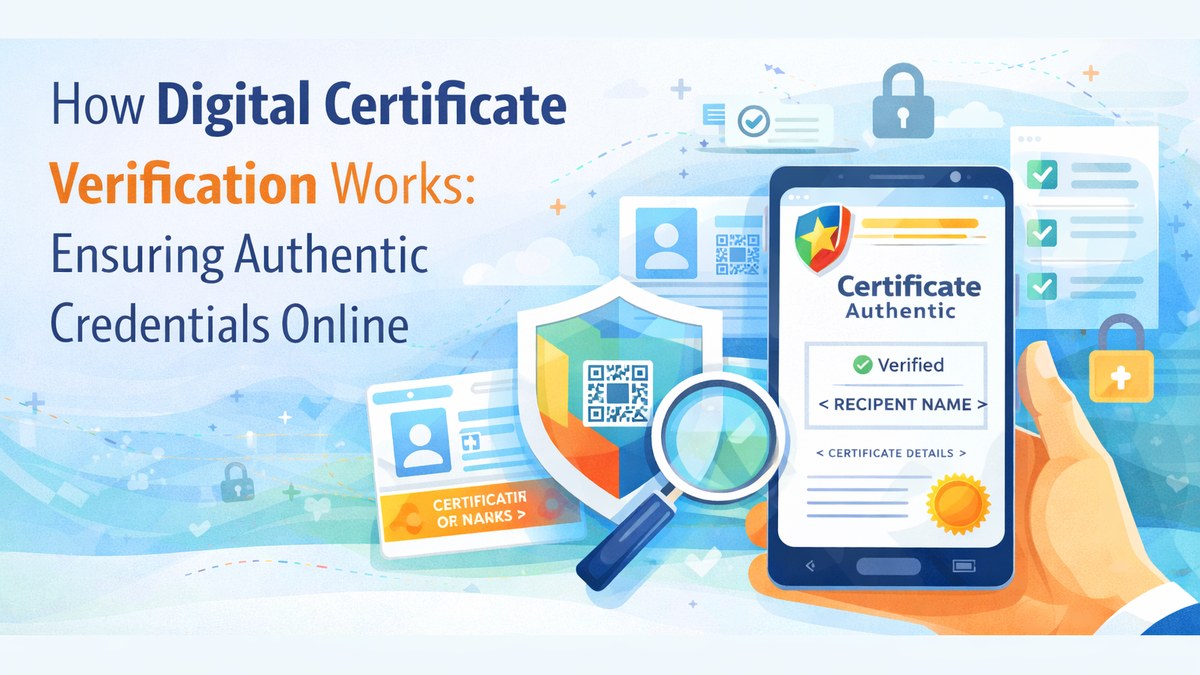
A certificate verification page is a system-generated page that displays trusted certificate details after validation through a QR code, certificate ID, token, or secure lookup flow. Instead of relying only on the downloaded document, the verifier can refer to the official source controlled by the issuing organization.
Why Verification Pages Matter
Certificates are often shared beyond the original recipient. They may be submitted during recruitment, academic applications, training audits, promotion reviews, or professional profile updates. In such cases, third parties need a reliable way to confirm authenticity.
Verification pages reduce uncertainty and help prevent situations where a certificate is doubted simply because there is no easy validation method.
Key Benefits
1. Stronger Trust
Verification pages make credentials easier to trust because they are backed by an official system record.
2. Reduced Manual Validation Requests
Instead of contacting organizers or institutions for confirmation, verifiers can check the credential directly.
3. Better Institutional Reputation
An organization that offers verification appears more professional and more serious about credential integrity.
4. Better Recipient Confidence
Recipients can share their credentials knowing that authenticity can be confirmed independently.
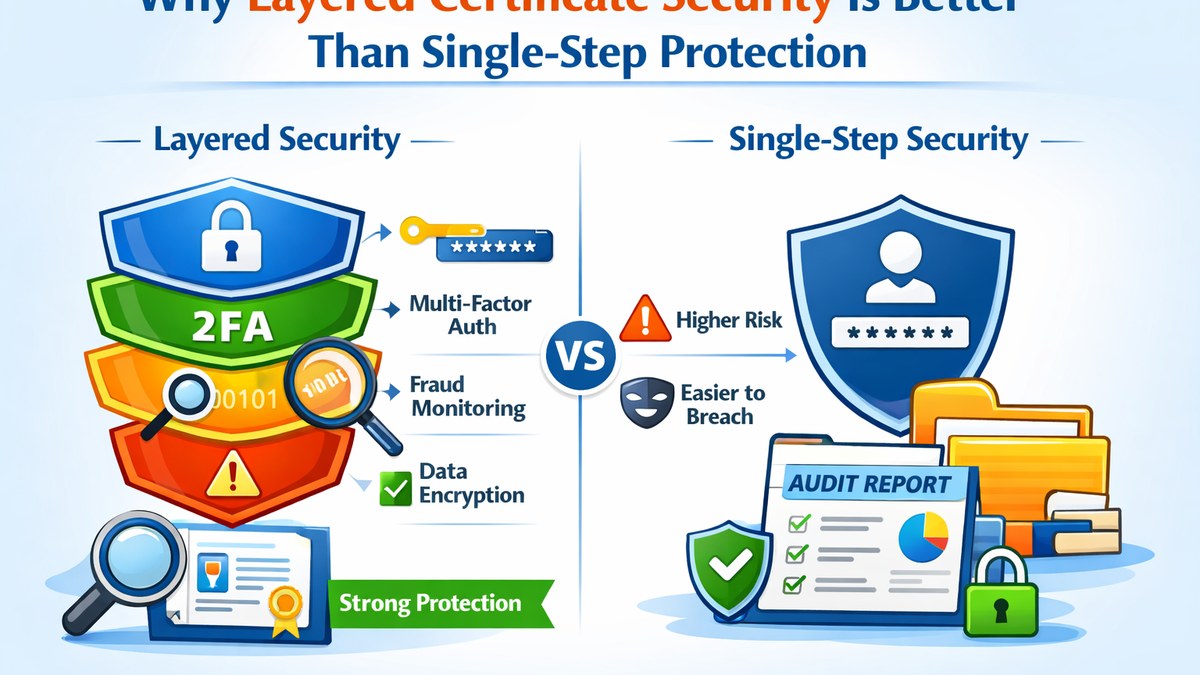
Why Verification Is a Core Security Layer
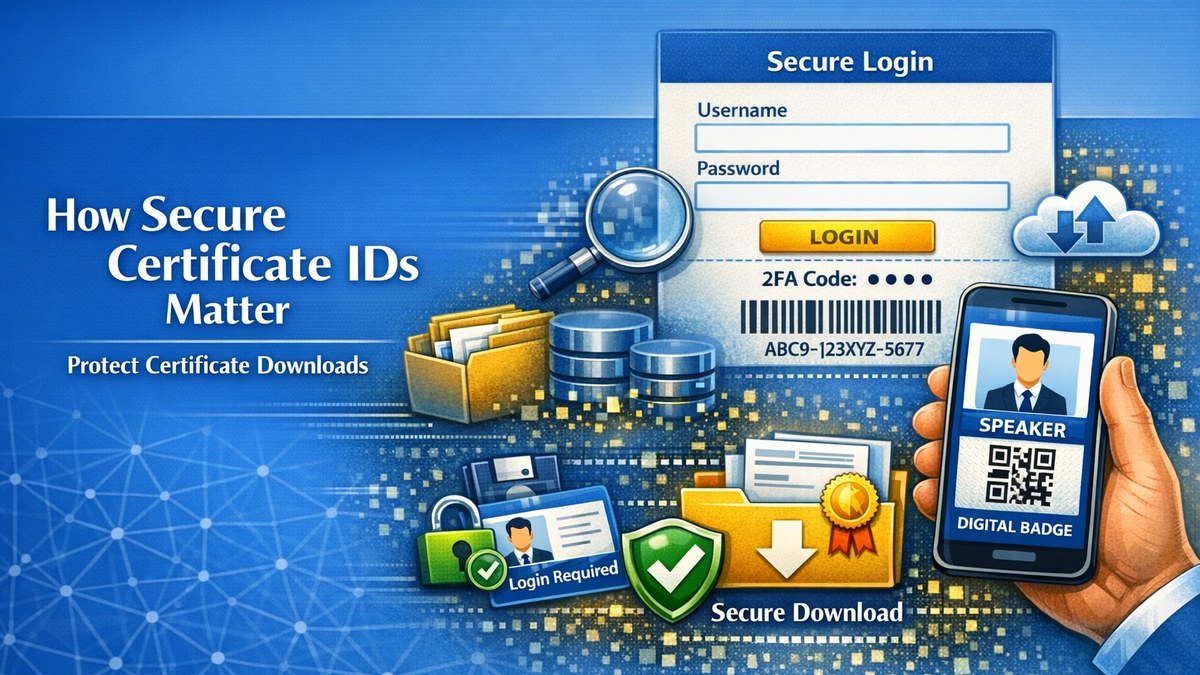
Even when secure access controls are used during download, verification remains important after the certificate is shared. A verification page gives the issuing organization an ongoing role in trust confirmation, even after the certificate leaves the original delivery workflow.
Conclusion
Certificate verification pages strengthen digital credentials by making them easier to validate, easier to trust, and more useful in real-world academic and professional settings. They are one of the most important building blocks of a secure certificate ecosystem.